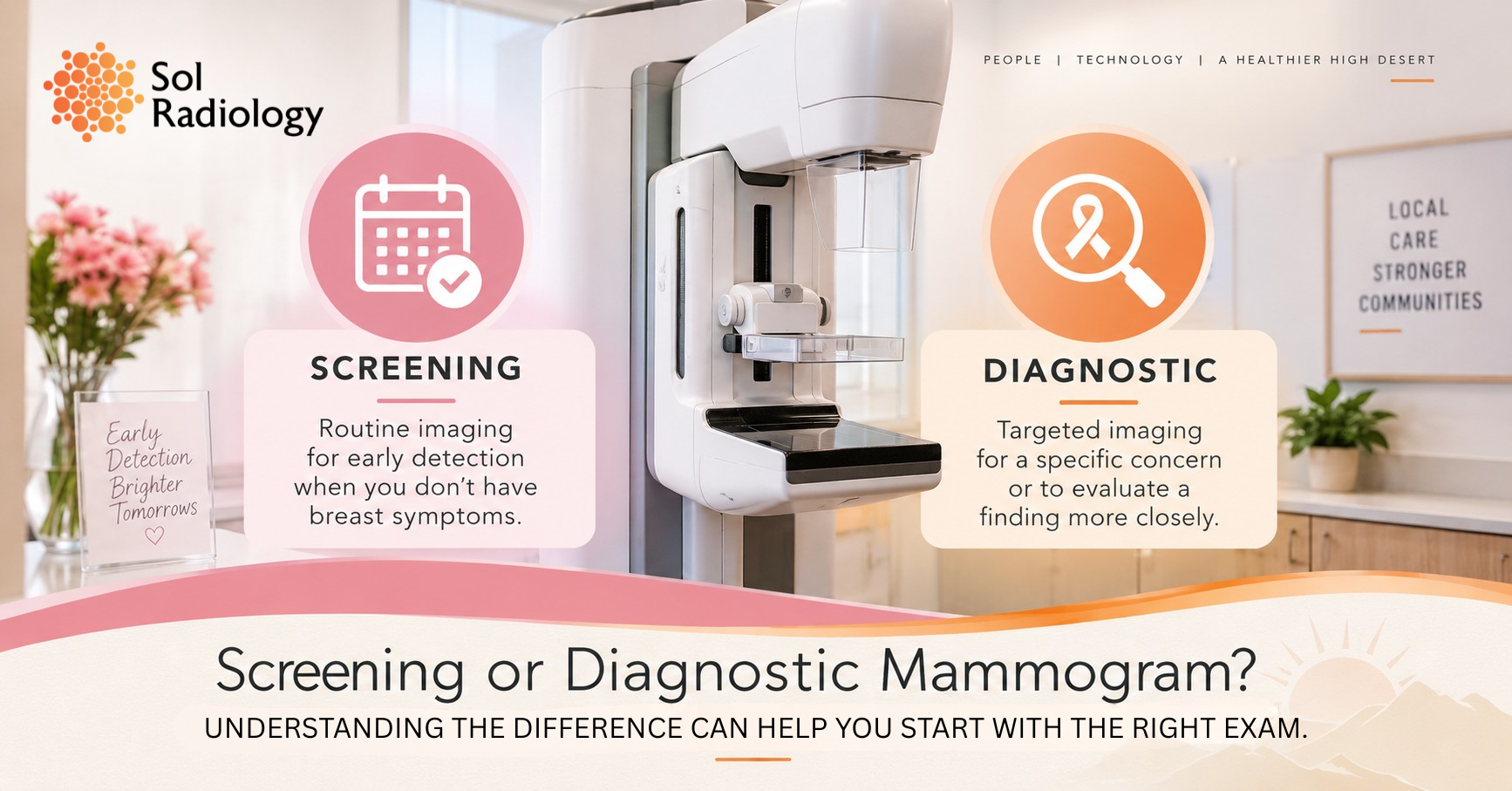

A screening mammogram is generally used to look for signs of breast cancer in someone who does not have breast symptoms. A diagnostic mammogram is used when there is a specific breast concern—such as a lump, nipple discharge, or another change—or when a screening mammogram shows an area that needs a closer look. Diagnostic exams may include additional or more targeted mammographic views. American Cancer Society
Both exams use mammography. The difference is primarily why the exam is being performed and what clinical question the radiologist needs to answer.
What Is a Screening Mammogram?
Screening mammography is preventive imaging performed before a person has breast symptoms. Its purpose is to look for breast cancer or other findings that may not yet be noticeable by touch or cause symptoms. Mammograms can sometimes identify breast cancer before a lump can be felt. American Cancer Society
For people at average risk, national organizations agree that regular mammography beginning around age 40 is important, although recommended intervals differ. The U.S. Preventive Services Task Force currently recommends screening mammography every two years from ages 40 through 74 for average-risk women, while the American College of Radiology and Society of Breast Imaging recommend annual screening beginning at age 40. Individual recommendations may differ based on personal risk, family history, prior breast findings, and other clinical factors. USPSTF
Patients should discuss their personal screening schedule with their healthcare provider rather than relying on a general age guideline alone.
What Is a Diagnostic Mammogram?
Diagnostic mammography is used to evaluate a specific concern or finding.
Examples may include:
- A new breast lump
- Nipple discharge
- Certain nipple or skin changes
- A focal area of breast concern
- An area identified on a screening mammogram that needs additional evaluation
Diagnostic mammography may include additional or specially focused images beyond the standard views typically obtained during screening. Depending on the clinical question, other breast imaging—such as ultrasound—may also be recommended. American Cancer Society
A diagnostic mammogram does not mean that someone has breast cancer. It means the radiologist is evaluating a particular question more closely.
If I Have a Breast Lump, Should I Schedule a Screening Mammogram?
If you notice a new breast lump, nipple discharge, skin or nipple change, or another concerning breast symptom, tell your healthcare provider and the imaging center before scheduling a routine screening examination.
A diagnostic evaluation may be more appropriate when symptoms are present because the imaging can be tailored to the specific concern. CDC guidance also recommends contacting a healthcare provider when a new breast change is noticed rather than simply waiting for routine screening. CDC
Providing that information before the appointment can help the referring provider and imaging team determine the appropriate type of breast imaging.
What Happens If I Am Called Back After a Screening Mammogram?
Sometimes a screening mammogram identifies an area that needs another look.
A callback may lead to diagnostic mammography, additional mammographic views, ultrasound, or another evaluation depending on the finding. Being called back does not automatically mean breast cancer has been found. Additional imaging is often performed to determine whether a finding is normal breast tissue or something that needs further evaluation. American Cancer Society
This distinction is one reason the terms screening and diagnostic matter: screening looks for possible abnormalities in people without symptoms, while diagnostic imaging investigates a specific finding or concern.
Is a Diagnostic Mammogram “Better” Than a Screening Mammogram?
Neither exam is inherently better.
They are designed for different situations.
A screening mammogram is designed to efficiently evaluate both breasts in someone without symptoms. A diagnostic mammogram is tailored to investigate a specific concern and may require additional images.
The correct exam depends on the clinical question.
Is 3D Mammography Used for Screening or Diagnostic Exams?
Digital breast tomosynthesis, often called 3D mammography, can be used in both screening and diagnostic breast imaging. The USPSTF recognizes both digital mammography and digital breast tomosynthesis as effective screening modalities, and RadiologyInfo describes diagnostic mammography performed with breast tomosynthesis as well. USPSTF
Sol Radiology’s current mammography information states that its breast imaging services use 3D tomosynthesis. Sol Radiology
What Should I Tell the Imaging Center Before My Mammogram?
When scheduling breast imaging, tell the healthcare provider or imaging team about any new breast concern rather than assuming a routine screening appointment is appropriate.
Useful information may include whether you have noticed a lump, nipple discharge, focal pain, skin or nipple changes, prior breast surgery, a history of breast cancer, or previous abnormal imaging.
Prior mammograms are also important for comparison when available. RadiologyInfo specifically advises patients to make previous mammograms available to the interpreting radiologist when they were performed at another facility. Radiologyinfo.org
For referring offices, clear clinical information helps the imaging team understand the question the examination is intended to answer.
How AI-Assisted Mammography Fits In at Sol Radiology
Sol Radiology’s current website states that eligible screening mammograms include AI-assisted image review at no additional patient cost. This technology is used as an additional layer of support; the mammogram is still interpreted by a radiologist. Sol Radiology
AI-assisted review does not replace the radiologist and does not guarantee that every cancer or abnormality will be detected.
Mammography in Victorville and the High Desert
For patients in Victorville, Apple Valley, Hesperia, and surrounding High Desert communities, having breast imaging available locally can make routine screening and necessary follow-up more convenient.
Sol Radiology provides mammography at its Victorville breast imaging center and currently lists 3D tomosynthesis among its mammography technology. Sol also holds ACR mammography accreditation. Sol Radiology
If you are unsure whether you need a screening or diagnostic mammogram, your referring healthcare provider and Sol Radiology’s scheduling team can help clarify the appropriate next step based on the order and clinical situation.
Ready to Schedule?
For scheduling assistance, call 760-728-1900 or contact Sol Radiology. The current contact page confirms scheduling assistance and the Victorville breast imaging location. Sol Radiology
This article provides general educational information and is not a substitute for individualized medical advice. Talk with your healthcare provider about your personal breast cancer risk, symptoms, and recommended screening schedule.